November 09, 2010

Life outside of academe means failure

What almost no prospective graduate students can understand is the extent to which doctoral education in the humanities socializes idealistic, naïve, and psychologically vulnerable people into a profession with a very clear set of values. It teaches them that life outside of academe means failure, which explains the large numbers of graduates who labor for decades as adjuncts, just so they can stay on the periphery of academe.

November 07, 2010

The disasters produced by the changing of values

What I think, fundamentally, is that you can’t do anything about major societal changes. It may be regrettable that the family unit is disappearing. You could argue that it increases human suffering. But regrettable or not, there’s nothing we can do. That’s the difference between me and a reactionary. I don’t have any interest in turning back the clock because I don’t believe it can be done. You can only observe and describe. I’ve always liked Balzac’s very insulting statement that the only purpose of the novel is to show the disasters produced by the changing of values. He’s exaggerating in an amusing way. But that’s what I do: I show the disasters produced by the liberalization of values.
Michel Houellebecq, Paris Review interview

November 05, 2010

Unlike the rest of us, the enemy is not caught in the toils of the vast mechanism of history


The paranoid spokesman sees the fate of conspiracy in apocalyptic terms, he traffics in the birth and death of whole worlds, whole political orders, whole systems of human values. He is always manning the barricades of civilization. He constantly lives at a turning point. Like religious millenialists he expresses the anxiety of those who are living through the last days and he is sometimes disposed to set a date fort the apocalypse. (“Time is running out,” said Welch in 1951. “Evidence is piling up on many sides and from many sources that October 1952 is the fatal month when Stalin will attack.”)


As a member of the avant-garde who is capable of perceiving the conspiracy before it is fully obvious to an as yet unaroused public, the paranoid is a militant leader. He does not see social conflict as something to be mediated and compromised, in the manner of the working politician. Since what is at stake is always a conflict between absolute good and absolute evil, what is necessary is not compromise but the will to fight things out to a finish. Since the enemy is thought of as being totally evil and totally unappeasable, he must be totally eliminated—if not from the world, at least from the theatre of operations to which the paranoid directs his attention. This demand for total triumph leads to the formulation of hopelessly unrealistic goals, and since these goals are not even remotely attainable, failure constantly heightens the paranoid’s sense of frustration. Even partial success leaves him with the same feeling of powerlessness with which he began, and this in turn only strengthens his awareness of the vast and terrifying quality of the enemy he opposes.

The enemy is clearly delineated: he is a perfect model of malice, a kind of amoral superman—sinister, ubiquitous, powerful, cruel, sensual, luxury-loving. Unlike the rest of us, the enemy is not caught in the toils of the vast mechanism of history, himself a victim of his past, his desires, his limitations. He wills, indeed he manufactures, the mechanism of history, or tries to deflect the normal course of history in an evil way. He makes crises, starts runs on banks, causes depressions, manufactures disasters, and then enjoys and profits from the misery he has produced. The paranoid’s interpretation of history is distinctly personal: decisive events are not taken as part of the stream of history, but as the consequences of someone’s will. Very often the enemy is held to possess some especially effective source of power: he controls the press; he has unlimited funds; he has a new secret for influencing the mind (brainwashing); he has a special technique for seduction (the Catholic confessional).

It is hard to resist the conclusion that this enemy is on many counts the projection of the self; both the ideal and the unacceptable aspects of the self are attributed to him. The enemy may be the cosmopolitan intellectual, but the paranoid will outdo him in the apparatus of scholarship, even of pedantry.


November 03, 2010

The first legitimate limit

“I had failed to realize,” Peter reflects, “that the body was the first legitimate limit.”

November 01, 2010

A ruthless self-interest

The straight and narrow beckoned. A ruthless self-interest defined my apostasy. I wanted women. I wanted to write novels. Sobriety meant efficacy. I couldn't advance my agenda in my current raggedy-ass state.

September 25, 2010

Luck is not a business model

It’s a little sad sometimes when I look out at a bookstore audience and see young fans of Kitchen Confidential, for whom the book was a validation of their worst natures. I understand it, of course. And I’m happy they like me.
….
I’m extremely skeptical of the “language of addiction.” I never saw heroin or cocaine as “my illness.” I saw them as some very bad choices that I walked knowingly into. I fucked myself—and, eventually, had to work hard to get myself un-fucked.

And I’m not going to tell you here how to live your life.

I’m just saying, I guess, that I got very lucky.

And luck is not a business model.

So You Wanna Be a Chef, by Anthony Bourdain

OK, will be getting back into this.

July 30, 2010

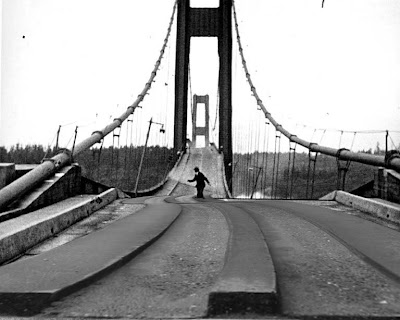
Working with small data sets

tacoma narrows bridge
Every belief is a hypothesis, every action an experiment.

July 20, 2010

Certain inexorable trends

And what made it extraordinarily clever [...] was that this project would not even be a struggle as such. They would not have to defeat any adversary or overcome any obstacle - merely ride along with certain inexorable trends. All they [...] had to do was notice these trends.
Neal Stephenson, Quicksilver, p224

July 19, 2010

Live like there's no tomorrow

...propaganda was above all effective where it was building upon, not countering, already existing values and mentalities.

July 18, 2010

The mistress of the house

hate has quite eaten her up inside. but the pleasure of ownership has remained.
Women As Lovers, Elfriede Jelinek, p173

July 17, 2010

Unenlightened self-interest

Due to a 7-yr old house guest have only been to a bar once in the past month, and thus spent no time listening to people who drink, smoke, eat too much, exercise too little and carry too much debt complaining how stupid ‘the masses’ are for not acting in their own interests.

July 16, 2010

The hate grows ever bigger

the grandmother's role is the soothing role.
that's why granny is liked so much by the children. granny is always disliked by husband and wife, because she interferes.
her own husband, the grandad, hates granny, first of all because he always already hated her when he was younger, which an old much-loved habit, which one cannot give up so easily, and one keeps up this hatred in old age, because what does one have in old age after all, nothing except one's good old tried tested hate.
and the hate grows ever bigger, because the granny has long ago lost her only capital, a beauty which was perhaps present. granny was devalued. grandad, the worn out old duffer, long ago lost the other younger women to other worn out but younger men, who are still able to earn a living.
the younger women won't risk their secure existence at the side of these younger men for an old bugger like him.
so grandad too dies away, more slowly and more drawn-out than his almost-dead wife, but anyhow; dying is dying, lost is lost and gone. and one's own wife will always remind one of the decline from young lad to dirty old man.
Women As Lovers, Elfriede Jelinek, p82

July 15, 2010

The better life of others

but paula goes on looking at the better world, wherever she can grab hold of it, no matter where, in the cinema or with a summer visitor. but it always only the better life of others, never her own.
Women As Lovers, Elfriede Jelinek, p19

July 14, 2010

Wonderful times

terrible, this slow dying. and the husbands and the wives die away together, the husband does get a bit of variety, he watches over his wife like a watchdog outside, he watches over her as she dies, and from the inside the wife watches over the husband, the female summer visitors, her daughter and the housekeeping money, which must not be boozed away. and from the outside the man watches over his wife, the male summer visitors, his daughter and the housekeeping money, so that he can divert some for his boozing. and so they die in mutual dependence. and the daughter can hardly wait, to be allowed to die at last also, and the parents are already going shopping for the daughter's death: sheets and towels and dish clothes and a used refrigerator. then at least she'll stay dead but fresh.
Women As Lovers, Elfriede Jelinek, p15

July 05, 2010

Blurbs that work

The setting is an idyllic Alpine village where a woman's underwear factory nestles in the woods.

Two factory workers, Brigitte and Paula, dream and talk about finding happiness, a comfortable home and a good man. They realize that their quest will be as hard as work at the factory. Brigitte subordinates her feelings and goes for Heinz, a young, plump, up-and-coming businessman. With Paula, feelings and dreams become confused. She gets pregnant by Erich, the forestry worker. He's handsome, so they marry.

Brigitte gets it right. Paula gets it wrong.
Back cover of Women As Lovers, Elfriede Jelinek

June 20, 2010

Midway upon the journey of our life

So I saw in my dream that the man began to run. Now he had not run far from his own door, but his wife and children perceiving it, began to cry after him to return; but the man put his fingers in his ears, and ran on, crying, "Life! life! Eternal life!" So he looked not behind him, but fled towards the middle of the plain.
John Bunyan, Pilgrim's Progress

June 07, 2010

A lack of nerve and imagination

Some people must fit perfectly well into the world as it is. Others don't, and must change themselves and / or their environment. But some don't fit and don't change anything, and those people are fucked most of all.

This idea is probably due to a lack of nerve and imagination on my part.

June 06, 2010

The imperatives of survival on six distinct time scales

katie allen [click image for huge]
The destiny of our species is shaped by the imperatives of survival on six distinct time scales. To survive means to compete successfully on all six time scales. But the unit of survival is different at each of the six time scales. On a time scale of years, the unit is the individual. On a time scale of decades, the unit is the family. On a time scale of centuries, the unit is the tribe or nation. On a time scale of millennia, the unit is the culture. On a time scale of tens of millennia, the unit is the species. On a time scale of eons, the unit is the whole web of life on our planet. Every human being is the product of adaptation to the demands of all six time scales. That is why conflicting loyalties are deep in our nature. In order to survive, we have needed to be loyal to ourselves, to our families, to our tribes, to our cultures, to our species, to our planet. If our psychological impulses are complicated, it is because they were shaped by complicated and conflicting demands.

June 03, 2010

Same same, but different

I don't know about you, and I don't know what your friends are like. But this seems to me to be a sadder, more hungry generation. And the thing that I get scared of is, when we're in power, when we're the forty-five and fifty-year olds. And there's really nobody - no older - that no people older than us with memories of the Depression, or memories of war, that had significant sacrifices. And there's gonna be no check on our appetites. And also our hunger to give stuff away.
...
And we're the first generation - maybe people starting about my age, it started in '62. We grew up sorta in the rubble of the old system. And we know we don't want to go back to that. But the sort of - this confusion of permissions, or this idea that pleasure and comfort are the, are really the ultimate goal and meaning of life. I think we're starting to see a generation die...on the toxicity of that idea.
Related post: The long line of supposedly beaten generations

May 27, 2010

Flaws, biases, & irrationality

The characteristic feature of the loser is to bemoan mankind's flaws, biases, & irrationality -- without exploiting them for fun and profit.
Nassim Taleb, aphorisms via twitter.

May 25, 2010

More aware than me

I just think to look across the room and automatically assume that somebody else is less aware than me, or that somehow their interior life is less rich, and complicated, and acutely perceived than mine, makes me not as good as a writer. Because that means I'm going to performing for a faceless audience, instead of trying to have a conversation with a person

What I'm doing now

Philosophy calls for simple living, not for doing penance, and the simple way of life need not be a crude one.
My girlfriend moved into this house a few weeks ago, with the gaps between her going back to her place becoming longer and longer and then ending. We work together, break for meals and eat good food, drink coffee and wine. So far it's an easy way to live, with no fight and no resistance.

One odd thing about the last few months is how contentment has stopped me from needing or even wanting to update this blog.

When I was a lot younger and writing [very badly] all the time it was because I had none of the good things in my life that I have now, and even though I enjoyed writing a lot, it was like drink or drugs, a poor substitute for the thing itself, a coping mechanism rather than a solution.

Great things can come out of sickness, but never mine, and the only way out after butting my head against the wall for so long was to change my life. I quit my job and keep whatever hours I want as long as the work I accept gets done. I work in shorts or a sarong, take breaks and bike rides whenever needed, never face a boss and never need to work when not in the mood. It's as close to idyllic as I could expect with minimal effort or talent.

My ambitions when I was younger mostly concerned lifestyle rather than achievement, but for a long time I focused on the latter and failed. When I gave in and went straight for the thing itself rather than tokens I found that it was easy to achieve and [so far] to maintain. Life is essentially a joke and a game at the moment, although I'm sure it'll get serious again soon enough.
If you shape your life according to nature, you will never be poor; if according to people's opinions, you will never be rich.
Seneca quoting Epicurus, Letters from a Stoic p65

May 23, 2010

Suit and tie

Inwardly everything should be different but our outward face should conform with the crowd.

May 16, 2010

Time off

To live under constraint is a misfortune, but there is no constraint to live under constraint.
Seneca, quoting Epicurus, Letters from a Stoic p59

May 14, 2010

Sokal cont'd

almost taiwan

Still avoiding this and doing other things, but read the following in Neal Stephenson's In the Beginning was the Command Line and wanted to file it next to the Sokal posts:
It is obvious, to everyone outside of the United States, that our arch-buzzwords, multiculturalism and diversity, are false fronts that are being used (in many cases unwittingly) to conceal a global trend to eradicate cultural differences. The basic tenet of multiculturalism (or "honoring diversity" or whatever you want to call it) is that people need to stop judging each other-to stop asserting (and, eventually, to stop believing ) that this is right and that is wrong, this true and that false, one thing ugly and another thing beautiful, that God exists and has this or that set of qualities.

The lesson most people are taking home from the Twentieth Century is that, in order for a large number of different cultures to coexist peacefully on the globe (or even in a neighborhood) it is necessary for people to suspend judgment in this way. Hence (I would argue) our suspicion of, and hostility towards, all authority figures in modern culture. As David Foster Wallace has explained in his essay "E Unibus Pluram," this is the fundamental message of television; it is the message that people take home, anyway, after they have steeped in our media long enough. It's not expressed in these highfalutin terms, of course. It comes through as the presumption that all authority figures--teachers, generals, cops, ministers, politicians--are hypocritical buffoons, and that hip jaded coolness is the only way to be.

The problem is that once you have done away with the ability to make judgments as to right and wrong, true and false, etc., there's no real culture left. All that remains is clog dancing and macrame. The ability to make judgments, to believe things, is the entire it point of having a culture. I think this is why guys with machine guns sometimes pop up in places like Luxor, and begin pumping bullets into Westerners. They perfectly understand the lesson of McCoy Air Force Base. When their sons come home wearing Chicago Bulls caps with the bills turned sideways, the dads go out of their minds.

The global anti-culture that has been conveyed into every cranny of the world by television is a culture unto itself, and by the standards of great and ancient cultures like Islam and France, it seems grossly inferior, at least at first. The only good thing you can say about it is that it makes world wars and Holocausts less likely--and that is actually a pretty good thing!

The only real problem is that anyone who has no culture, other than this global monoculture, is completely screwed. Anyone who grows up watching TV, never sees any religion or philosophy, is raised in an atmosphere of moral relativism, learns about civics from watching bimbo eruptions on network TV news, and attends a university where postmodernists vie to outdo each other in demolishing traditional notions of truth and quality, is going to come out into the world as one pretty feckless human being. And--again--perhaps the goal of all this is to make us feckless so we won't nuke each other.

On the other hand, if you are raised within some specific culture, you end up with a basic set of tools that you can use to think about and understand the world. You might use those tools to reject the culture you were raised in, but at least you've got some tools.

In this country, the people who run things--who populate major law firms and corporate boards--understand all of this at some level. They pay lip service to multiculturalism and diversity and non-judgmentalness, but they don't raise their own children that way. I have highly educated, technically sophisticated friends who have moved to small towns in Iowa to live and raise their children, and there are Hasidic Jewish enclaves in New York where large numbers of kids are being brought up according to traditional beliefs. Any suburban community might be thought of as a place where people who hold certain (mostly implicit) beliefs go to live among others who think the same way.